Agro Tourism Stays in Maharashtra: What They Are and How to Choose a Farmstay
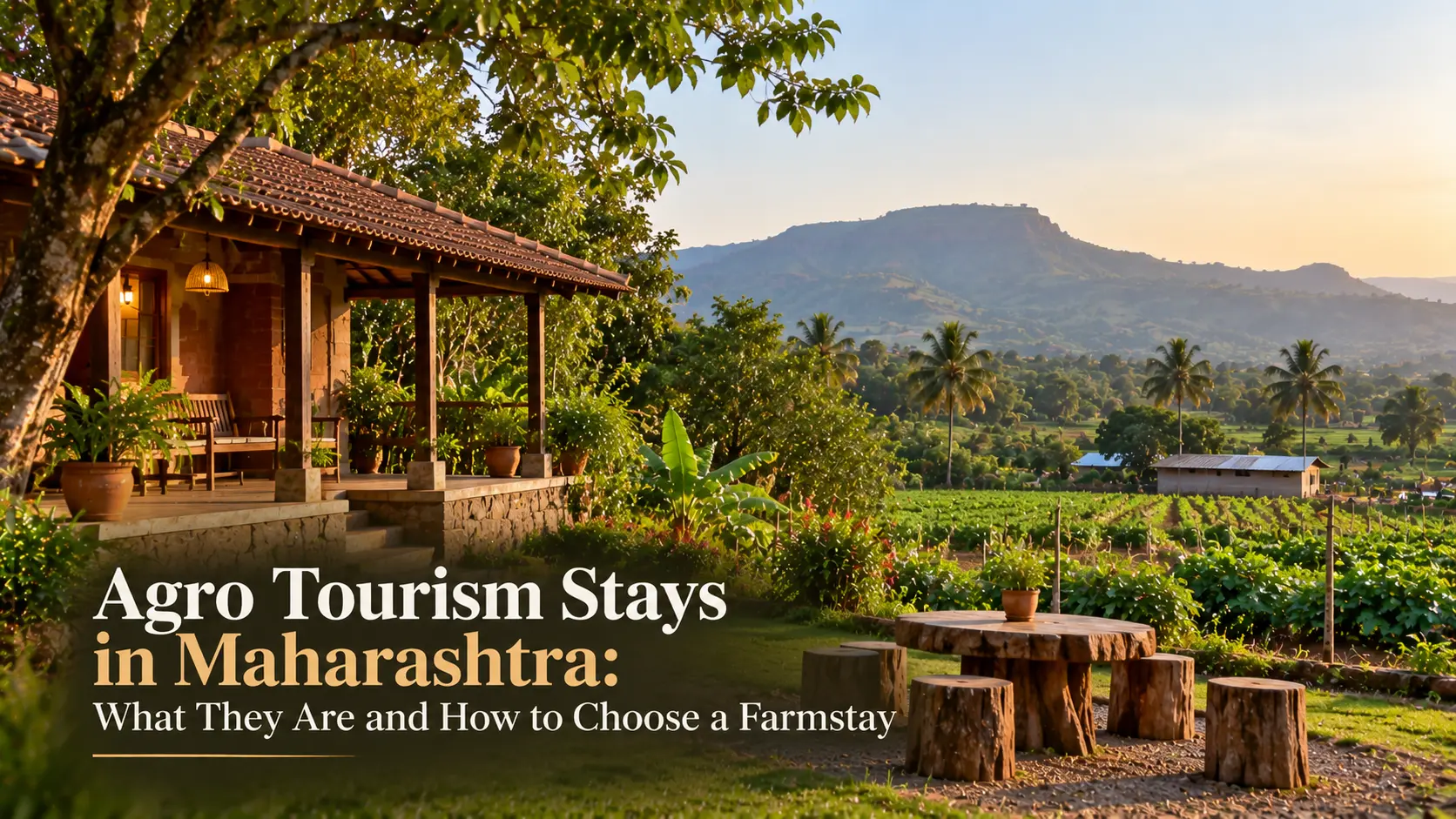
Agro tourism simply means staying on or near a working farm, usually in a village. Instead of a hotel lobby you get fields, orchards, home-cooked food and a host who lives on the land. In Maharashtra it has become a popular choice for families, friend groups and city travellers who want a slower weekend.
What to expect from a farmstay
Expect space and quiet, with large open grounds and few neighbours. Meals are often cooked by the host family, sometimes with produce from the farm itself. Rooms are usually clean but basic, and standards vary quite a bit from one property to the next. Some hosts offer farm walks or village visits and some don't, so ask what's actually available before you book.
Agro tourism stays on KaraBook
KaraBook lists a wide range of farm and agro stays across the state. A few examples:
Ruturang Agro Resort, Bhor (verified): Rs 2,800 a night
Shantai Agro Resort, Velhe (verified): Rs 2,499 a night
Ekant Farmhouse and Resorts, Donje, Pune: Rs 1,600 a night
Falcon Agro, Kasarsai, Pimpri: Rs 5,000 a night
Hirvai Waterfall Agro Tourism, Thoseghar, Satara: Rs 5,000 a night
Ganesh Agro Tourism, Rajapur, Ratnagiri: Rs 5,500 a night
Sun Farm Agro Tourism, Parsani, Satara: Rs 12,000 a night
Yugankur Farmhouse, Loni, Ahmednagar: Rs 1,599 a night
Rates are as listed on 31 Oct 2026 and vary by season and number of guests.
Who should choose a farmstay?
Families with children get room to run in a safe, open setting. Groups of friends get a private space for evenings and meals together. Remote workers and writers get quiet. And visitors from outside Maharashtra get a close look at village life and local food.
How to pick a good one
Start with the location, and ask how far it is from the nearest town, hospital and petrol station. Look for the Verified badge, which tells you the property has been checked. Ask about food, including meals, dietary needs and whether you can use a kitchen. Confirm the basics too: power backup, hot water, mobile network and clean toilets. Don't assume farm tours, boating or bonfires are included, and read the rules on pets, children, music and alcohol.
Best time to go
The monsoon makes the fields green and lush, winter gives comfortable days and cool evenings, and summer is quieter. Harvest times vary by crop, so ask your host what's in season.
Frequently asked questions
Is a farmstay the same as a farmhouse?
Not always. A farmhouse is a private property you rent, while an agro tourism stay is usually a working farm or farm-based property with a host on site.
Are farmstays cheaper than resorts?
Often yes, with many stays under Rs 3,000 a night, though larger properties cost more.
Are they safe for families?
Generally yes. Ask about open water, animals and the surrounding terrain, and supervise children outdoors.
Do farmstays have Wi-Fi and mobile network?
It varies. Rural areas can have patchy coverage, so ask the host about network and Wi-Fi if you need to work.
Can I bring pets to a farmstay?
Some hosts allow pets and some do not. Confirm in advance, especially if animals live on the farm.
Do I need to arrange meals in advance?
Many hosts cook on request, but nearby restaurants can be far away, so confirm the meal plan before you arrive.
Find your farmstay
Browse all farmhouses and agro stays on KaraBook. Property owners can learn about listing a farm stay.